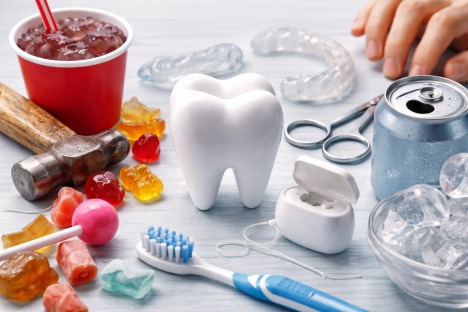
Most people think tooth problems come from major issues like cavities or trauma. In reality, many dental problems begin with small daily habits that slowly damage enamel, irritate gums, and weaken the overall foundation of your smile. The good news is that these habits are easy to correct once you know what to look out for. Below are ten everyday actions that harm your teeth and simple ways to protect them.
- Brushing Too Hard
Many people believe brushing harder cleans better. In reality, aggressive brushing wears down enamel and irritates the gums. Over time, this can lead to sensitivity, gum recession, and even exposed tooth roots.
How to fix it:
Use a soft-bristle toothbrush and gentle circular motions. Imagine brushing as if you are massaging your teeth, not scrubbing them. Electric toothbrushes with pressure sensors can also be helpful, as they alert you when you apply too much force.
- Skipping Flossing
Brushing alone cleans only about two-thirds of the tooth surface. The remaining areas between teeth collect plaque, food particles, and harmful bacteria. When left uncleaned, these areas are more prone to gum disease and tooth decay.
How to fix it:
Floss daily, even if it’s just once before bedtime. If traditional floss feels difficult to use, try floss picks or a water flosser. The key is cleaning between the teeth consistently.
- Snacking All Day
Every time you eat, your mouth becomes slightly acidic. Frequent snacking means your teeth are exposed to repeated acid attacks, which weaken enamel and increase the risk of cavities.
How to fix it:
Limit snacks to one or two times a day. If you need something between meals, choose tooth-friendly options such as nuts, cheese, or vegetables. Drinking water after snacking also helps reduce acidity.
- Drinking Too Many Sugary or Acidic Drinks
Soft drinks, sports drinks, iced tea, fruit juices, flavoured water, and even kombucha can harm enamel. Acid softens tooth surfaces, while sugar feeds the bacteria that cause decay.
How to fix it:
Consume sugary and acidic drinks in moderation. Use a straw so the liquid bypasses your teeth, and rinse your mouth with water afterward. Avoid brushing for at least 30 minutes after acidic drinks to prevent enamel abrasion.
- Using Your Teeth as Tools
It is surprisingly common for people to open packaging, remove bottle caps, cut thread, or bite their nails using their teeth. These habits can cause cracks, chips, or even sudden fractures.
How to fix it:
Keep basic tools such as scissors, bottle openers, or nail clippers nearby. Train yourself to pause and grab the correct tool instead of relying on your teeth. This small habit change can prevent unnecessary dental emergencies.
- Grinding or Clenching Your Teeth
Many people grind or clench their teeth without realising it, especially during sleep or stressful moments. This habit wears down enamel, causes jaw pain, and can lead to headaches or cracked teeth.
How to fix it:
If you suspect teeth grinding, speak to your dentist. A custom night guard can protect your teeth while you sleep. During the day, practise jaw-relaxation techniques, manage stress where possible, and avoid chewing gum, which can increase jaw tension.
- Chewing Ice
Ice may feel harmless because it is just frozen water, but chewing it places significant stress on your enamel. Ice is much harder than many people realise and can cause micro-fractures, chips, or weakened fillings.
How to fix it:
If you enjoy the cold sensation, let ice melt in your mouth instead of chewing it. Alternatively, choose chilled water or sugar-free popsicles for a similar effect without the risk.
- Poor Hydration
A dry mouth creates an ideal environment for bacteria to multiply. Saliva is essential for neutralising acids, washing away food particles, and protecting enamel. When you are dehydrated, your mouth becomes more vulnerable to decay and bad breath.
How to fix it:
Drink water consistently throughout the day, aiming for at least six to eight glasses. Chewing sugar-free gum can also help stimulate saliva production. If dry mouth persists, your dentist can recommend specialised products or treatments.
- Brushing Immediately After Meals
Brushing straight after eating—especially acidic foods—can actually harm enamel. Acid softens the outer layer of the tooth, and brushing too soon can scrub away this softened enamel.
How to fix it:
Wait 20 to 30 minutes after meals before brushing. If you want to freshen your mouth right away, rinse with water or chew sugar-free gum to help stabilise the pH level.
- Ignoring Small Dental Issues
Mild sensitivity, a small chip, occasional bleeding gums, or slight discomfort may seem easy to ignore. However, these minor issues often develop into more serious conditions such as gingivitis, infections, or deep cavities.
How to fix it:
Visit your dentist for regular check-ups. Early detection saves time, money, and discomfort. If something feels unusual in your mouth—even if it seems minor—schedule an appointment for a quick evaluation.
Conclusion
Protecting your teeth does not require major lifestyle changes. Small adjustments to everyday habits can make a significant difference in long-term oral health. Brushing gently, flossing daily, staying hydrated, avoiding harmful chewing habits, and maintaining regular dental visits all help keep your teeth strong and healthy.
If you have noticed sensitivity, enamel wear, or discomfort, a dental professional can guide you with personalised advice and treatment options. Taking proactive steps today will help you maintain a bright, healthy smile for years to come.
We are a dental clinic offering general, preventative and emergency dental services, including dental hygiene, dental implants and more, located 20km east of the Melbourne CBD. We are a short drive away from both Melbourne's Eastern freeway and Eastlink and close-by the suburbs of Donvale, Park Orchards, Nunawading, Vermont, Blackburn & Ringwood.